The Evaluation of Thin-Plate Low Carbon Steel in Spot Welding with Non-Destructive Test (NDT) and Destructive-Test (DT): Pressure Effect
Abstract
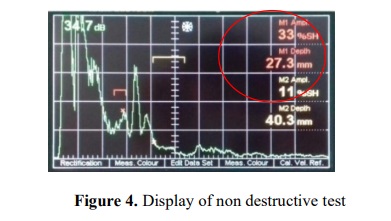
This paper has the purpose of how the pressure affects the weld quality and weldability on thin-plate low carbon steel with a thickness of 1 + 1 mm. The method used to know the impact of the welding quality by experimenting with the welding process with low carbon steel thin plate material with a composition of 99,65% Fe and 0,05% C, it is low carbon steel and has a thickness of 1 + 1 mm using Cu electrode by providing the various parameters given the pressure of 1-5 bar, testing of Non-Destructive Test (Ultrasonic Test) and Destructive Test (DT): shear testing, microstructure test. The result of NDT testing obtained deformation of thick plate thickness at 1 bar pressure has bigger deformation compared to 5 bar pressure, while in microstructure test result of 1-2 bar pressure has better weldability than the pressure of 3-5 bar, while the result of the tensile - shear test obtained a large load of 1 bar of 544 kgf greater than 5 bar tensile - shear test with load 248 kgf, it can be recommended for welding on thin-plate low carbon steel 1 + 1 mm thickness can be given 1 bar loading.
Downloads